Watch an archer in a flowing hakama raise a bow taller than they are, and you can tell right away that this is not the archery you have seen at the Olympics. The kyudo vs archery comparison is one of the first questions our guests ask, and it is a good one. The two share a bow, a string, and an arrow, but almost everything else, from the equipment to the goal of the shot, is different.
In this guide, we break down what makes kyudo, the Japanese way of the bow, so distinct, and what those differences mean for you if you want to try it during your trip to Japan.
Kyudo vs Archery: Two Different Goals
Modern Western archery, the kind you see in international competition, is a sport. Success is measured in points, and the equipment and training are all designed to land arrows in the center of the target as consistently as possible.
Kyudo takes a different view. It grew out of the battlefield archery of the samurai and, over the centuries, developed into a martial art often described as standing meditation. In kyudo, the way you shoot matters as much as where the arrow lands. Practitioners work on posture, breathing, and calm focus, with the idea that a correct, sincere shot will naturally find the target.
That is the heart of the difference: one measures the result, the other refines the process. Neither approach is better. They are simply after different things.
The Bow Itself Is Completely Different
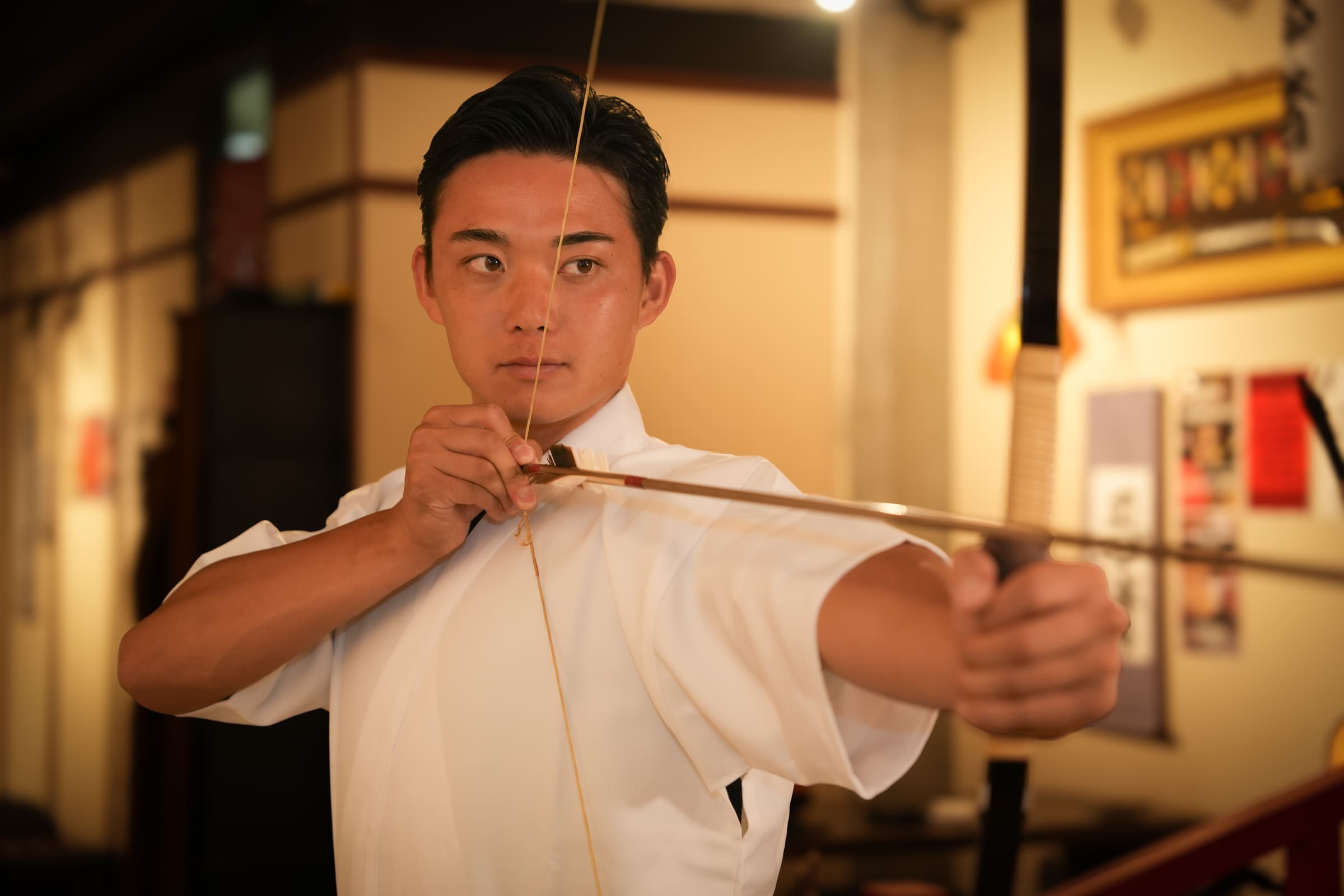
The Japanese bow, called a yumi, is immediately striking. It typically stands over two meters tall, often taller than the person shooting it, and its grip sits below the center rather than in the middle. Traditional yumi are crafted from laminated bamboo and wood, though modern training bows often use synthetic materials.
A modern Olympic recurve, by contrast, is a precision instrument. It has a sight for aiming, stabilizers to reduce vibration, and an arrow rest, and compound bows add cams that make holding at full draw easier. A yumi has none of this. There is no sight, no stabilizer, no arrow rest. The arrow simply rests against your hand.
Even the draw is different. Western archers usually pull the string to an anchor point at the chin or cheek. In kyudo, the string is drawn long, back past the ear, so the archer seems to open up inside the bow. It looks, and feels, unlike anything else.
Form, Ritual, and Etiquette
Kyudo shooting follows a set sequence of movements, traditionally described as eight stages, that carries you from your first step to the release and beyond. Every footstep, breath, and turn of the head has its place. Practitioners repeat this sequence for years, polishing it a little at a time.
Etiquette runs through everything. Archers bow toward the target area, move with quiet deliberation, and treat the equipment with respect. A kyudo hall tends to be a calm, focused place, closer in atmosphere to a tea ceremony than to a sports range.
Then there is the dress. Kyudo is usually practiced in a white keikogi top and pleated hakama trousers. The outfit is a big part of the art’s visual identity, and honestly one of the highlights of trying it as a visitor.
What First-Timers Notice Most
If you have shot a bow before, even once at a summer camp, kyudo will feel both familiar and completely new. Based on what our guests tell us, here is what stands out on a first try:
- The size of the bow: raising a two-meter yumi for the first time is a genuinely memorable moment.
- The slower pace: you do not rapid-fire arrows. Each shot is prepared with care, which is surprisingly relaxing.
- No aiming aids: with no sights, you learn to trust your posture and form instead of a gadget.
- The clothing: shooting in hakama changes how you stand and move, and it makes every photo look fantastic.
- The quiet: the focus on breathing and stillness is why so many people describe kyudo as meditative.
You do not need strength, prior experience, or any Japanese language ability to enjoy a beginner session. If you are wondering about things like age limits or what to wear, our frequently asked questions cover what we hear most often.
Where to Try Kyudo in Kyoto or Tokyo
Traditional kyudo dojos are wonderful, but most are geared toward long-term students rather than travelers on a tight schedule. That is exactly the gap Kyudo Experience Cafe was made to fill.
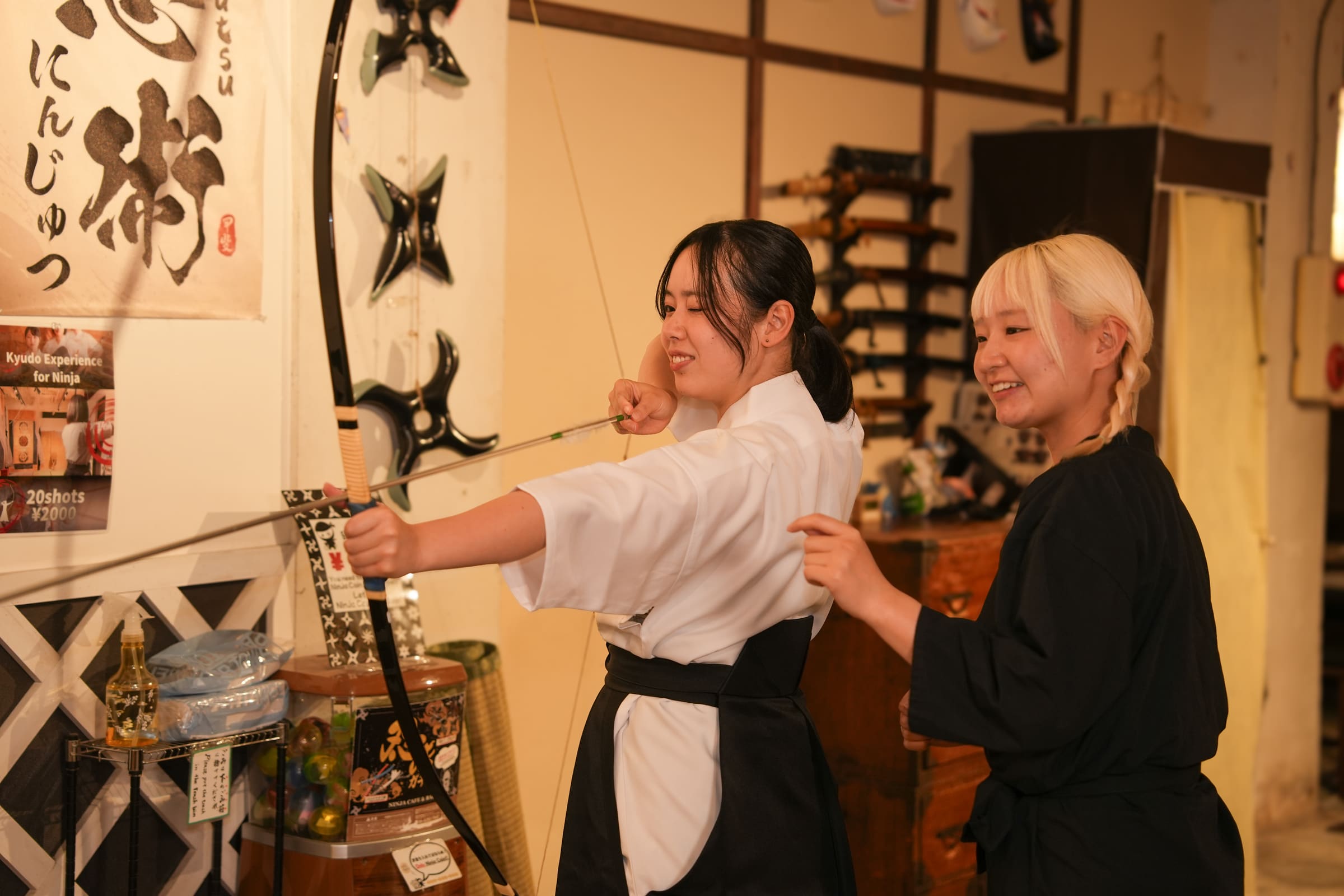
Our casual 30-minute experience runs inside Ninja Experience Cafe in Kyoto and in Harajuku, Tokyo. You change into a hakama (rental included), and an instructor guides you step by step through holding the yumi, drawing, and releasing your own arrows. A drink is included, and there is plenty of time for photos in full archery dress. Sessions are beginner-friendly and English-friendly, with the standard plan from ¥3,000.
It is an easy add-on to a day of sightseeing: no experience needed, no long commitment, just a real taste of Japanese archery in a relaxed setting.
Final Thoughts
In the end, the kyudo vs archery question is not about which one is better. Western archery offers the thrill of precision and competition, while kyudo offers ritual, calm, and a living piece of Japanese culture. If you are visiting Japan, few souvenirs beat the memory of your first arrow leaving a yumi.
Still curious about the details? Browse our FAQ before your visit, or reserve your spot below. We would love to hand you your first bow.